Why Repad Stencil is Your Go-To Font for Creative & Machine Projects
There’s a moment in every design project where you need a font that doesn’t just sit there looking pretty—it needs to work hard. Maybe you’re etching a logo onto leather, cutting vinyl decals for a market stall, or designing a social media post that needs to grab attention in a crowded feed. This is exactly where a typeface like Repad Stencil steps in, blending quirky personality with practical engineering that many display fonts overlook.
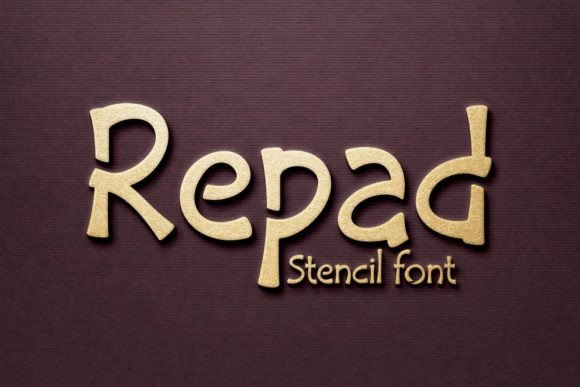
At its core, Repad Stencil is a display font with a distinctly playful yet functional character. What sets it apart visually is its stencil-cut aesthetic—each letterform features intentional gaps or breaks, giving designs an industrial, crafted, or hands-on feel. But here’s the real magic: those open loops and breaks aren’t just for style. They’re designed specifically for applications involving lasers, engravers, CNC machines, and vinyl cutters. Because there are no fully closed loops in the characters, blades and laser paths won’t get trapped, making it a reliable choice for physical production work. This practical design consideration often gets overlooked in many display fonts, making Repad Stencil a standout asset for makers and small business owners who move between digital design and tangible products.
A Font Built for Real-World Making
If you’ve ever tried to use a standard script or serif font with a cutting machine, you’ve likely run into the issue of enclosed counters—the tiny spaces inside letters like ‘o’, ‘e’, or ‘a’. Machines can struggle with these, sometimes cutting out the inner shape completely or leaving messy results. Repad Stencil eliminates that headache. Its broken letterforms ensure clean cuts and etches, whether you’re working with wood, acrylic, leather, or paper.
This makes it an ideal companion for:
- Custom signage and wall art – Think wooden signs for home decor or market stalls.
- Product packaging and labels – Especially for brands with a handmade or artisanal aesthetic.
- Apparel and merchandise – Vinyl decals for tote bags, hats, or t-shirts.
- Invitations and event materials – Wedding signage, party decorations, or place cards.
But don’t mistake its mechanical practicality for a lack of personality. Repad Stencil carries a fun, quirky vibe that works surprisingly well in digital spaces too. Its stencil style adds texture and visual interest without sacrificing readability at larger sizes, making it a versatile player in your design toolkit.
Branding with a Distinctive Edge
For small business owners and entrepreneurs, font choice is a subtle but powerful branding tool. A typeface communicates tone, industry, and values before a customer even reads a word. Repad Stencil’s aesthetic leans toward the creative, the hands-on, and the approachable. It’s a font that says, “We make things with care,” or “We don’t take ourselves too seriously—but we do great work.”
Consider using it for:
- Logo design – Particularly for businesses in crafting, DIY, food, coffee, brewing, or boutique retail. Its stencil look can evoke craftsmanship, authenticity, and a bit of retro flair.
- Social media graphics – Stand out in Instagram feeds or Pinterest boards with headers and quotes that have a tactile, textured feel. It pairs well with clean sans serif fonts for body text.
- Website headers and blog titles – Use it sparingly for impact. A blog about woodworking, home brewing, or handmade goods could use Repad Stencil for section headings to reinforce brand identity.
- Marketing collateral – Flyers, posters, and promotional materials for events, markets, or product launches can benefit from its bold, engaging presence.
The key with any display font is using it strategically. Repad Stencil isn’t meant for long paragraphs of text—it’s designed for headlines, logos, and short bursts of impactful text. Pair it with a simple, readable sans serif or a clean serif for body copy to maintain legibility while letting the stencil font do the heavy lifting in terms of style.
Practical Tips for Using Display Fonts Effectively
Choosing a creative font like Repad Stencil is just the first step. Using it well requires a bit of thought. Here are some practical considerations to keep in mind:
Test your pairings. Before committing, mock up how Repad Stencil looks alongside your chosen body font. Check the contrast in weight and style—you want harmony, not competition. A light, geometric sans serif often works well against the bold, broken forms of a stencil font.
Consider your medium. While Repad Stencil is engineered for physical production, remember that screen rendering can vary. Test it at the sizes you’ll actually use. In digital contexts, ensure the breaks in the letters don’t disappear at small sizes or on low-resolution screens.
Review the font styles included. Many premium fonts come with multiple weights or styles. Check what’s available with Repad Stencil—does it have bold or italic variations? Understanding the full range of the typeface helps you use it more flexibly across different applications.
Readability is still king. Even with a display font, clarity matters. If your audience can’t quickly read your headline or logo, the font isn’t doing its job. Repad Stencil’s design generally maintains good readability because the stencil cuts are intentional and consistent, but always get a second opinion from someone who hasn’t seen the design before.
Licensing matters for commercial use. If you’re using the font for client work, merchandise, or products you sell, ensure you have the appropriate commercial license. Most font designers and foundries offer clear licensing terms, so take a moment to review them. It’s a small step that protects your business and respects the work of the type designer.
Beyond the Basics: Creative Applications
Think beyond the obvious. Repad Stencil’s unique character can shine in editorial layouts for magazines or lookbooks, especially those covering topics like design, craft, or lifestyle. Use it for chapter titles, pull quotes, or section dividers to add visual interest.
For digital products—like downloadable planners, worksheets, or social media templates—incorporating a distinctive font like this can elevate perceived value and help your product stand out in a crowded marketplace. It signals a level of design thoughtfulness that customers appreciate.
Even in more traditional print materials, like business cards or letterheads, a subtle use of a stencil font for your name or a tagline can make your brand more memorable. The key is restraint and intentionality.
Ultimately, fonts are tools. Repad Stencil is a specialized tool with a clear personality and a practical edge for makers and creators. It bridges the gap between digital design and physical making, offering a solution that’s both visually engaging and functionally sound. Whether you’re etching a logo onto a product, designing a poster for a local fair, or crafting a social media campaign that needs a bit of grit and charm, it’s worth having in your font library. The best designs come from choosing tools that not only look good but work well—and that’s exactly what this typeface delivers.