Sweetie Honey: Adding a Playful Touch to Your Designs
Every designer knows the struggle of finding a typeface that captures a specific mood without sacrificing utility. You want something that feels personal and inviting, yet bold enough to command attention. When a project calls for a vibe that is friendly, energetic, and undeniably cheerful, standard corporate fonts simply won't do. This is where the specific character of a typeface becomes your most powerful storytelling tool, transforming plain text into an emotional connection with your audience. For those moments when you need to inject a burst of joy into your work, few options deliver quite like Sweetie Honey.
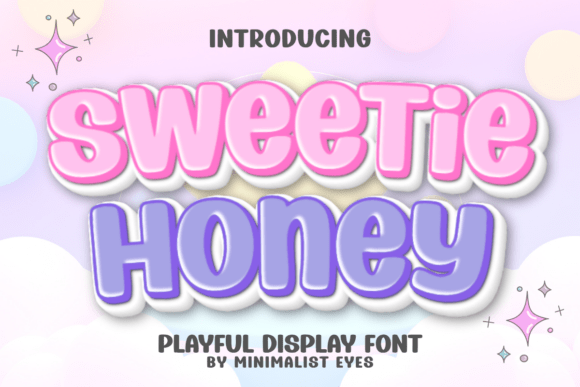
At its core, Sweetie Honey is a display font designed to mimic the soft, rounded aesthetic of hand-crafted lettering. It avoids the harsh edges of geometric sans-serifs and the rigid structure of traditional serifs. Instead, it embraces a "bubbly" personality. The letterforms are thick, rounded, and possess a gentle bounce that suggests movement and playfulness. This isn't just a font; it is a design asset that communicates warmth instantly. It feels familiar, almost like the handwriting of a close friend, making it an excellent choice for projects where approachability is key.
Visual Appeal and Creative Applications
The visual weight of Sweetie Honey is one of its strongest assets. Because the strokes are generally uniform and thick, it maintains high legibility even at smaller sizes or when viewed on digital screens. However, it truly shines as a display typeface. The slightly condensed spacing and the charming curves of letters like 'g', 'h', and 'y' give it a distinct rhythm. It doesn't feel stiff or overly polished; instead, it retains a human touch that modern typography often lacks.
For small business owners and creative entrepreneurs, versatility is non-negotiable. You need assets that can transition seamlessly between different mediums. Sweetie Honey is particularly effective in the realm of physical crafting. If you are a Cricut or Silhouette user, you know that not all fonts cut well. Fonts with thin, spindly parts can tear, and overly complex scripts can gum up the blades. Sweetie Honey, with its sturdy construction and smooth curves, is an ideal candidate for vinyl decals, iron-on transfers, and paper crafting. It creates clean cuts and bold impressions, ensuring your DIY stickers and personalized merchandise look professional.
Beyond the craft room, this typeface has significant potential in branding and packaging design. Imagine a line of artisanal baked goods, a children's clothing boutique, or a colorful stationery brand. Using Sweetie Honey for the logo or product labels immediately signals that the brand is fun, accessible, and high-quality. It works beautifully on packaging where you need to catch the consumer's eye quickly. The "sweet" aesthetic pairs perfectly with pastel color palettes, kraft paper textures, and vibrant illustrations.
Strategic Use in Digital Marketing and Web Design
In the crowded landscape of digital content, grabbing attention is half the battle. Social media managers and content creators often struggle to make their graphics stand out in a fast-scrolling feed. Sweetie Honey offers a solution through its distinct personality. Using this font for Instagram quotes, YouTube thumbnails, or Pinterest pins can break the monotony of standard web-safe fonts. It adds a layer of personality that stock photography and generic layouts cannot achieve.
When considering web design, readability is paramount. While Sweetie Honey is highly legible for a display font, it is best used strategically. It is perfect for hero section headlines, call-to-action buttons, or section headers where you want to draw the eye. Pairing it with a clean, neutral sans-serif font for body text creates a balanced visual hierarchy. The contrast between the playful header and the professional body copy ensures the site feels both friendly and trustworthy. This kind of font pairing is essential for maintaining a professional presentation while showcasing brand personality.
For those creating digital products—such as planners, educational worksheets, or e-books—Sweetie Honey can serve as a unifying design element. It helps in organizing information by clearly distinguishing headers from sub-headers, making the reading experience more enjoyable. In editorial layouts, such as newsletters or blog headers, it adds a creative flair that encourages readers to engage with the content.
Practical Tips for Implementation
Adopting a new typeface into your workflow requires more than just installation; it requires strategy. To get the most out of Sweetie Honey, consider these practical guidelines for your next project:
- Context is King: While Sweetie Honey is versatile, it has a strong personality. It fits naturally in industries related to food, children's products, beauty, lifestyle, and casual fashion. It might feel out of place in heavy industrial contexts or ultra-serious corporate reports. Always assess if the font's "voice" matches the project's subject matter.
- Check Your Licensing: Before using any premium font in a commercial capacity—whether for a client logo, a t-shirt design for sale, or a digital download—always verify the license. Ensure the license covers your specific intended use, such as "print-on-demand" or "digital ads."
- Test for Scalability: Typography looks different on a business card than it does on a billboard. Before finalizing a design, test Sweetie Honey at various sizes. Ensure the curves remain smooth and the spacing doesn't look too tight when scaled up for large format printing like posters or signage.
- Color Psychology: The rounded, soft nature of this font pairs exceptionally well with soft or bright colors. Deep blacks can sometimes make bubbly fonts look heavy. Try using dark greys, navy blues, or even brand colors to soften the impact while maintaining contrast.
- Kerning and Spacing: Even the best fonts may need manual adjustment. When using Sweetie Honey for large display text, check the spacing between specific letter pairs (kerning). Sometimes, letters with wide bases (like 'O' or 'V') need to be pulled closer together to create visual cohesion.
Building a Cohesive Visual Identity
Ultimately, the goal of choosing a specific typeface like Sweetie Honey is to build a stronger connection with your audience. Typography is a silent ambassador for your brand. When a customer sees the rounded, friendly shapes of Sweetie Honey on your packaging, website, and social media, they begin to associate those feelings of warmth and approachability with your business.
Whether you are a hobbyist making birthday invitations for family or a marketing professional launching a new lifestyle product, the tools you use shape the outcome. Sweetie Honey is more than just a collection of vectors; it is a design tool that facilitates creativity. It allows you to step away from the rigid structures of standard corporate design and embrace a more whimsical, human-centric approach to visual communication.
By integrating this typeface thoughtfully—balancing it with complementary fonts, respecting its visual weight, and applying it to the right contexts—you can elevate your projects from simple layouts to memorable experiences. It proves that in the world of design, a little sweetness goes a long way.