Brick Edgie: Capturing Urban Energy in Your Design Projects
You know that feeling when a design just needs to hit harder? When a polished, corporate typeface feels like putting a suit on a street artist—it just doesn’t fit the vibe. I run into this constantly when working with clients who want to project authenticity, grit, and a bit of rebellion. Whether it’s a craft brewery label, a fitness apparel brand, or a YouTube thumbnail, there is a specific visual language required to speak to an audience that values raw energy. That is where the concept of "street typography" comes into play, and it is exactly why a specific premium font can sometimes be the missing puzzle piece in your creative toolkit.
The Anatomy of Urban Typography
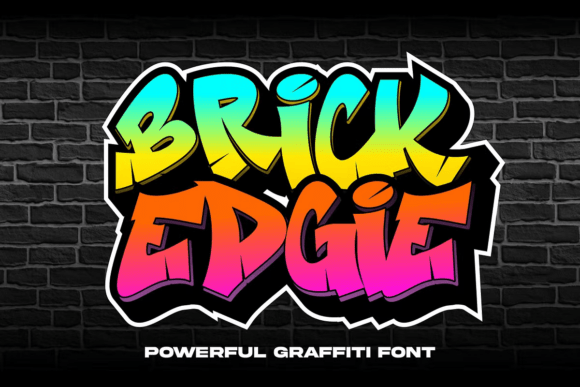
When we talk about fonts like Brick Edgie, we aren't just talking about letters; we are talking about attitude. This particular typeface is a display font that embodies the raw spirit of graffiti. It isn't trying to be neat or tidy. Instead, it utilizes sharp edges and a striking, angular design to mimic the look of spray paint on concrete. If you look at the visual characteristics, you will notice it avoids the soft curves of a standard sans serif font or the traditional structure of a serif font. Instead, it leans into a jagged, aggressive aesthetic that commands attention immediately.
For designers and entrepreneurs, the appeal of this style lies in its ability to bypass the "polished" look and go straight for emotional impact. In a world of minimalist logos and clean web design, a typeface with this much visual noise creates an instant focal point. It’s the typographic equivalent of a bass drop in a song—it signals that something energetic is happening.
Real-World Applications: Where Does This Fit?
The versatility of a creative font like this might surprise you. It’s not limited to skate shops or hip-hop album covers. I’ve seen this style work effectively across a wide range of industries where the goal is to disrupt the norm.
Consider the world of packaging design. If you are launching a line of hot sauces, energy drinks, or even artisanal street food, the packaging needs to scream "flavor" before the customer even tastes it. Using a bold, graffiti-inspired typeface for the product name creates that immediate sensory connection. Similarly, in merchandise design—think t-shirts, hoodies, and caps—this font style is practically native to the medium. It translates perfectly to screen printing and embroidery because of its bold lines and distinct silhouette.
For those focused on social media graphics, the scroll-stopping power of Brick Edgie is undeniable. Instagram stories, TikTok overlays, and YouTube thumbnails are battlegrounds for attention. A standard script font or handwritten font might get lost in a busy feed, but a sharp, edgy typeface cuts through the noise. It is particularly useful for announcing sales, drops, or events where urgency and excitement are key.
Strategic Branding and Font Pairing
One of the most common mistakes I see in logo design is the overuse of decorative fonts for body text. A font like Brick Edgie is a specialist. It is designed for headlines, logos, and headers. It is a bold font meant to be seen in short bursts. If you try to write a long paragraph with it, you will likely lose your audience because the eye needs to rest.
This brings us to the art of font pairing. To make this typeface work in a professional setting, you need to ground it. Because it is so loud and energetic, it pairs best with something quiet and legible. A clean, geometric sans serif font is usually the perfect partner. Use the graffiti style for the "punch"—the headline or the logo mark—and use the clean sans serif for the sub-headers and body copy. This contrast creates a hierarchy that guides the reader's eye naturally.
Think about editorial design or a blog layout. If you are writing about urban exploration, extreme sports, or underground music, using this font for your H1 and H2 tags establishes the theme immediately. However, the actual article text needs to be highly readable. This balance ensures your brand identity remains strong without sacrificing the user experience.
Readability and Context: The Professional’s Approach
When integrating a display font into your marketing assets, context is everything. While Brick Edgie is fantastic for grabbing attention, you have to consider the medium. On a dark background with high contrast, these sharp edges pop beautifully. On a busy photograph, you might need to add a drop shadow or a background block to ensure the text doesn't get lost.
It is also worth exploring the specific styles included with the typeface. Many high-quality design assets come with variations—perhaps a regular weight and an italicized or distressed version. Checking the included font styles allows you to add nuance to your visual consistency. You might use the standard version for the logo and the italicized version for accent text on a poster to create a sense of motion.
For those creating digital products or invitations, the tone must match the audience. This font is perfect for a flyer for a warehouse party, a gaming tournament, or a streetwear drop. It might not be the right choice for a wedding invitation or a corporate law firm's annual report, but for the right project, it adds an authenticity that generic fonts simply cannot replicate.
Commercial Considerations and Licensing
As you move from concept to execution, the practical side of using a commercial font comes into play. If you are a small business owner or a freelance designer, you have to be mindful of licensing. Most premium fonts require a specific license for commercial use. This is different from free fonts found on random repositories.
When you acquire a font like this legally, you are paying for the craftsmanship and the legal right to use it in your business. This is crucial for brand recognition. You don't want to build a brand identity around a font only to receive a cease-and-desist letter six months later. Always review the licensing agreement to ensure it covers your intended use, whether that is for a single client project, unlimited print runs, or digital distribution.
Ultimately, choosing the right typography is about communication. It’s about finding a visual voice that speaks the same language as your content. For projects that require energy, attitude, and a break from the mundane, a typeface with the sharp, aggressive geometry of Brick Edgie is an invaluable tool. It allows you to inject the spirit of the streets into your work, ensuring your designs don't just sit there, but actually speak up.