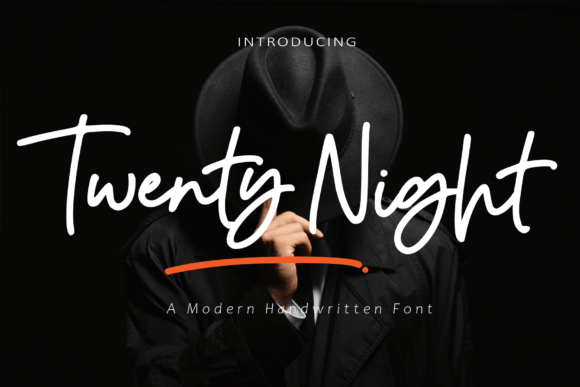
Twenty Night: Where Handwritten Charm Meets Modern Versatility
Finding a font that feels both personal and professional is a common challenge for designers and creators. You want something with warmth and character, but it can't sacrifice clarity or look out of place in a polished brand system. Enter Twenty Night, a modern handwriting font that strikes a rare balance. Its charm lies in its ability to feel wonderfully approachable while maintaining excellent readability, making it an incredibly versatile tool for a wide array of creative and commercial projects. Whether you're crafting a logo that needs a human touch or designing social media graphics that pop, this typeface offers a solution that feels both current and timeless.
A Typeface with a Relatable Personality
At its core, Twenty Night is designed to feel authentic. It avoids the overly scripted, hard-to-read loops of some traditional script fonts, opting instead for a cleaner, more contemporary handwritten style. The letterforms are consistent and well-spaced, which is crucial for legibility, especially in longer lines of text like a blog header or a product description. This isn't a font that shouts; it communicates with a friendly confidence. The Regular style provides a stable, clear foundation, perfect for primary text where readability is paramount. The Italic style introduces a gentle, flowing motion, ideal for adding emphasis, creating hierarchy, or infusing a bit more personality into headlines and callouts.
This duality is its greatest strength. You can use the Regular for a consistent brand voice across your website and packaging, then deploy the Italic for a dynamic social media quote graphic or a special announcement in an email newsletter. The font's personality adapts to the context, making it a reliable asset in any designer's toolkit.
From Screen to Print: Practical Applications That Shine
The true test of any premium font is how it performs across different mediums. Twenty Night excels here, proving its worth in both digital and physical spaces. Its clear construction ensures it renders beautifully on screens of all sizes, from mobile websites to large desktop monitors. This makes it a fantastic choice for web design and blog layouts, where you need headings that are engaging but won't cause eye strain.
For logo design and brand identity, it offers a distinct advantage. A logo set in Twenty Night immediately conveys approachability, creativity, and a modern sensibility. It’s particularly effective for brands targeting audiences in lifestyle, wellness, food, artisanal crafts, or boutique e-commerce. Think of a bakery's logo, a handmade jewelry brand, or a wellness coach's personal brand—the font's character aligns perfectly with stories of care, quality, and human connection.
Beyond logos, consider its use in:
- Packaging Design: Labels for small-batch products, gift boxes, or subscription services where a personal touch increases perceived value.
- Print Materials: Business cards, thank-you notes, and flyers for local events or workshops. The Italic style is perfect for a handwritten-feel signature or a special offer callout.
- Invitations & Cards: Wedding invitations, event announcements, and greeting cards where elegance and readability are both essential.
- Editorial Layouts: Pull quotes in magazines or digital publications that need to stand out from body text set in a serif font or sans serif font.
- Digital Products & Marketing Assets: E-book covers, online course graphics, and email headers that need to capture attention quickly in a crowded inbox.
Building a Cohesive Visual Language
One of the most significant benefits of integrating a font like Twenty Night into your workflow is the boost it gives to visual consistency. When you select a primary typeface for your brand or project, using it systematically across all touchpoints creates a unified and professional presentation. This consistency is a cornerstone of strong brand recognition. Your audience starts to associate the font's friendly, modern style with your specific message, building familiarity and trust over time.
However, versatility doesn't mean using it everywhere, all the time. The key is strategic pairing. Twenty Night works beautifully as a display font for headlines, logos, and short bursts of text. For longer body copy, especially in print or detailed web articles, pairing it with a highly legible sans serif font or a classic serif font is a wise practice. This pairing ensures your main content remains easy to read while your headings carry the unique personality. For example, a website might use Twenty Night for all its H1 and H2 headings, paired with a clean sans-serif like Open Sans or Lato for paragraphs. This creates a dynamic and engaging hierarchy that guides the reader's eye.
Making the Right Choice for Your Project
Before you commit, it's always smart to test a font in context. Download a sample of Twenty Night and try setting your actual project headlines, not just the alphabet. Does the letter spacing feel right for your logo? Does the Italic style create the emphasis you need for your call-to-action button? Check its readability on a busy background by layering it over a subtle texture or a colorful image—its clean lines are designed to hold up well in such scenarios.
Also, take a moment to review the specific styles included. Understanding the difference between the Regular and Italic will help you plan your typographic system more effectively. For commercial projects, always verify the licensing terms. A commercial font like Twenty Night typically comes with a license that permits use in client work, merchandise, and digital products, but it's crucial to read the specifics to ensure compliance.
In the end, choosing a typeface is about finding the right voice for your message. Twenty Night offers a voice that is modern, approachable, and reliably versatile. It’s a creative font that doesn’t just look good—it works hard to help you communicate more effectively, build a stronger brand, and connect with your audience on a more human level. From the first sketch of a logo to the final layout of a social media campaign, it provides a consistent and charming thread that ties your visual story together.